Asking someone’s name is harder than you think
In the financial world, it is common to ask for a customer's legal name. However, this can be problematic for individuals whose legal name does not match their gender identity. This is particularly relevant for transgender and non-binary individuals whose birth names may not align with their inherent identity. To address this concern, I helped launch a project that allows customers to input their affirmed name.
ROLE
My role included not only the UI and UX, but orchestrating stakeholder meetings and buy in. This work led to a larger shift in product design strategy toward inclusive design and won me an award at Betterment.
The problem
How can we navigate the legal complexities enmeshed in finance, and create an experience that stops deadnaming our trans and non-binary customers?
I worked with engineer Jess Harrelson on this project. We decided to start by letting users enter their names in the app's settings page. Our main goal was to capture this information during sign-up, but due to stakeholder complexities, we chose to focus on a proof of concept instead.
Our solution
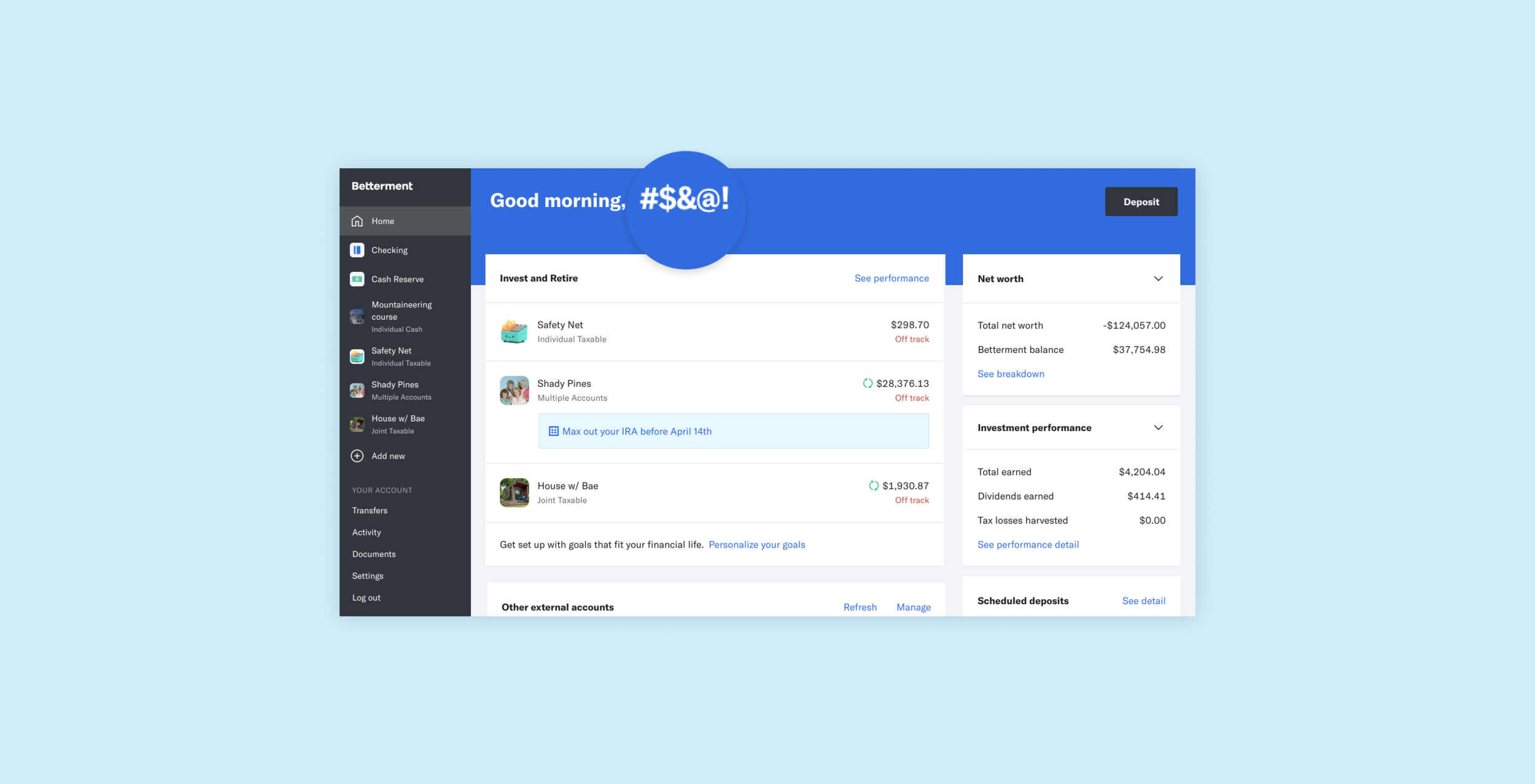
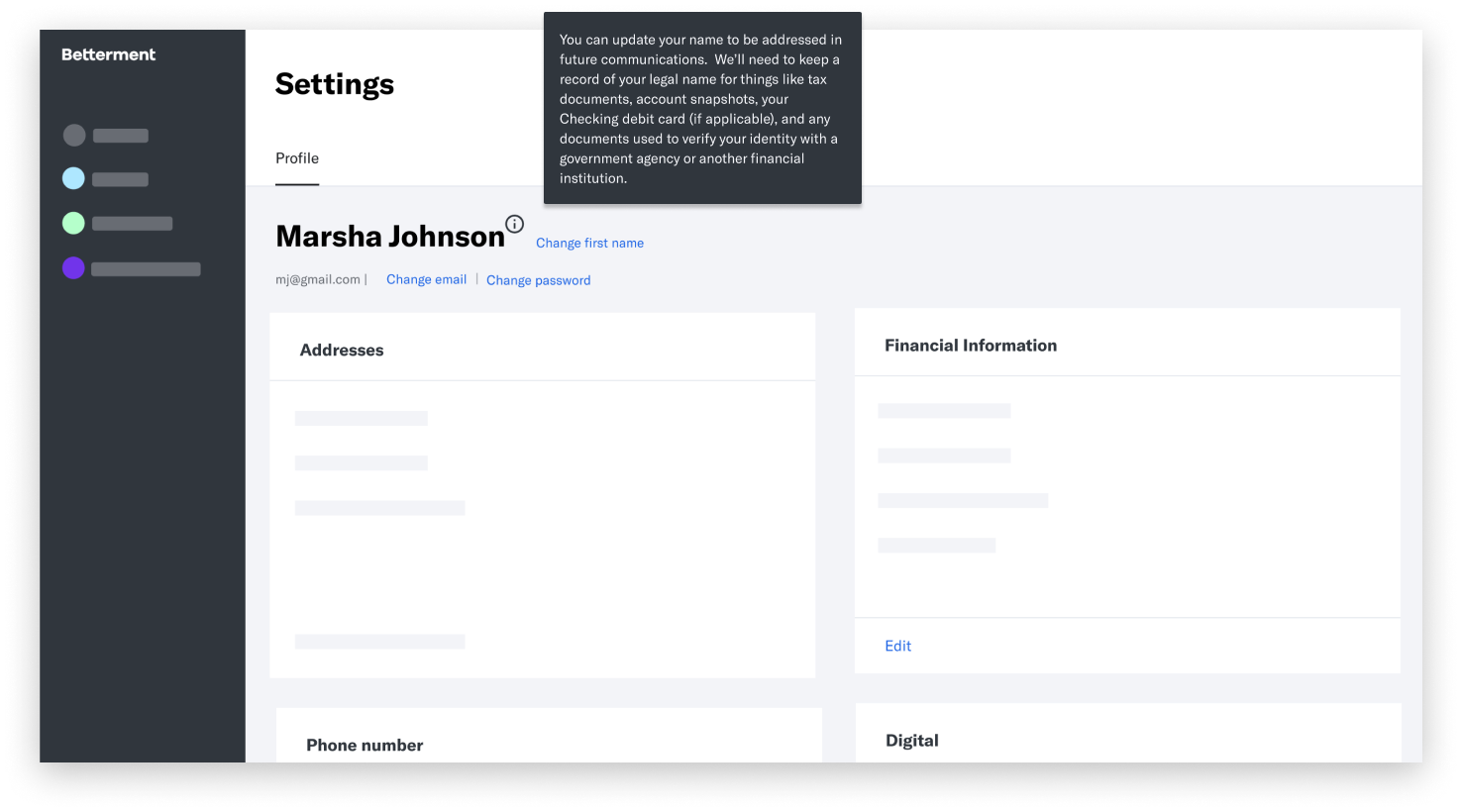
We added UI to the settings page to capture customers' preferred name. This included a button to launch a flow for capturing the name, saving it, and educating customers about the use of legal names. It also ensures that customers are addressed correctly in the app and emails. Deciding on the language for buttons, headings, tooltips, and sub copy turned out to be more challenging than anticipated.
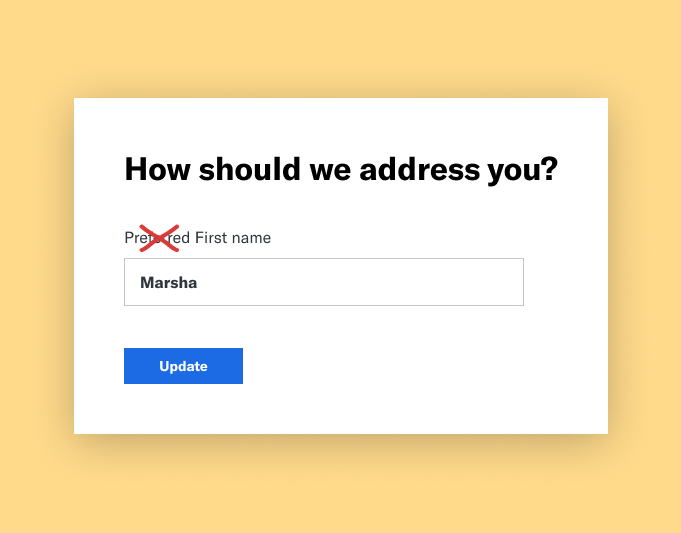
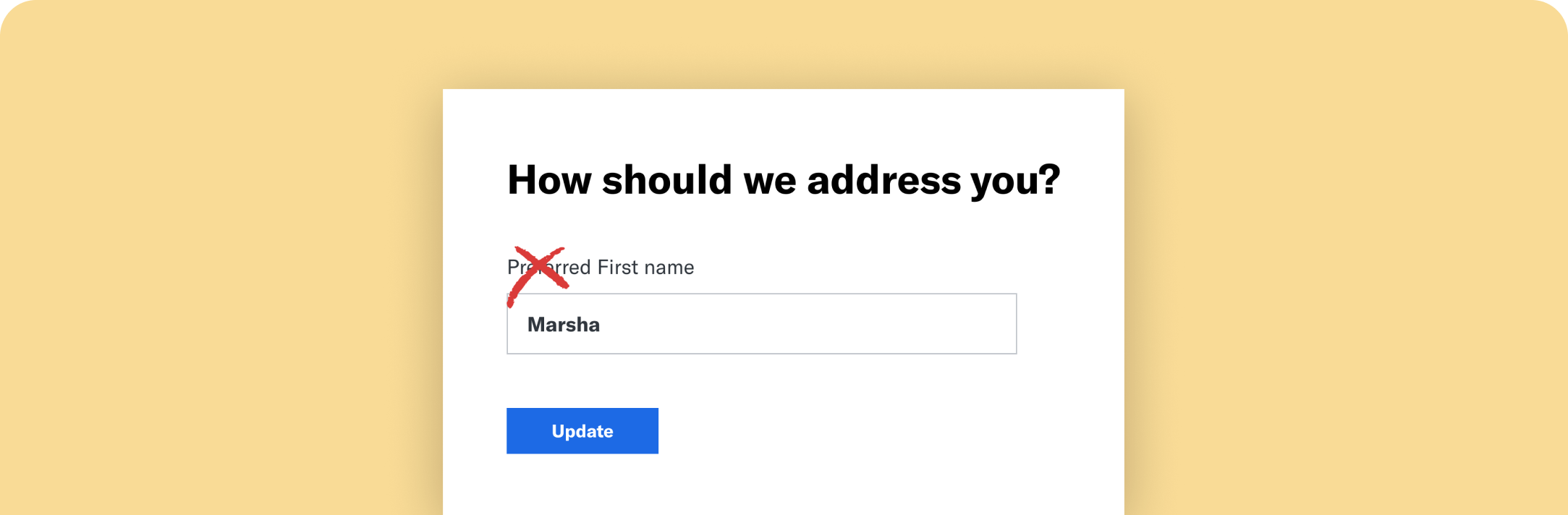
A trans or non-binary person’s name isn’t preferred, it’s their name. Period.
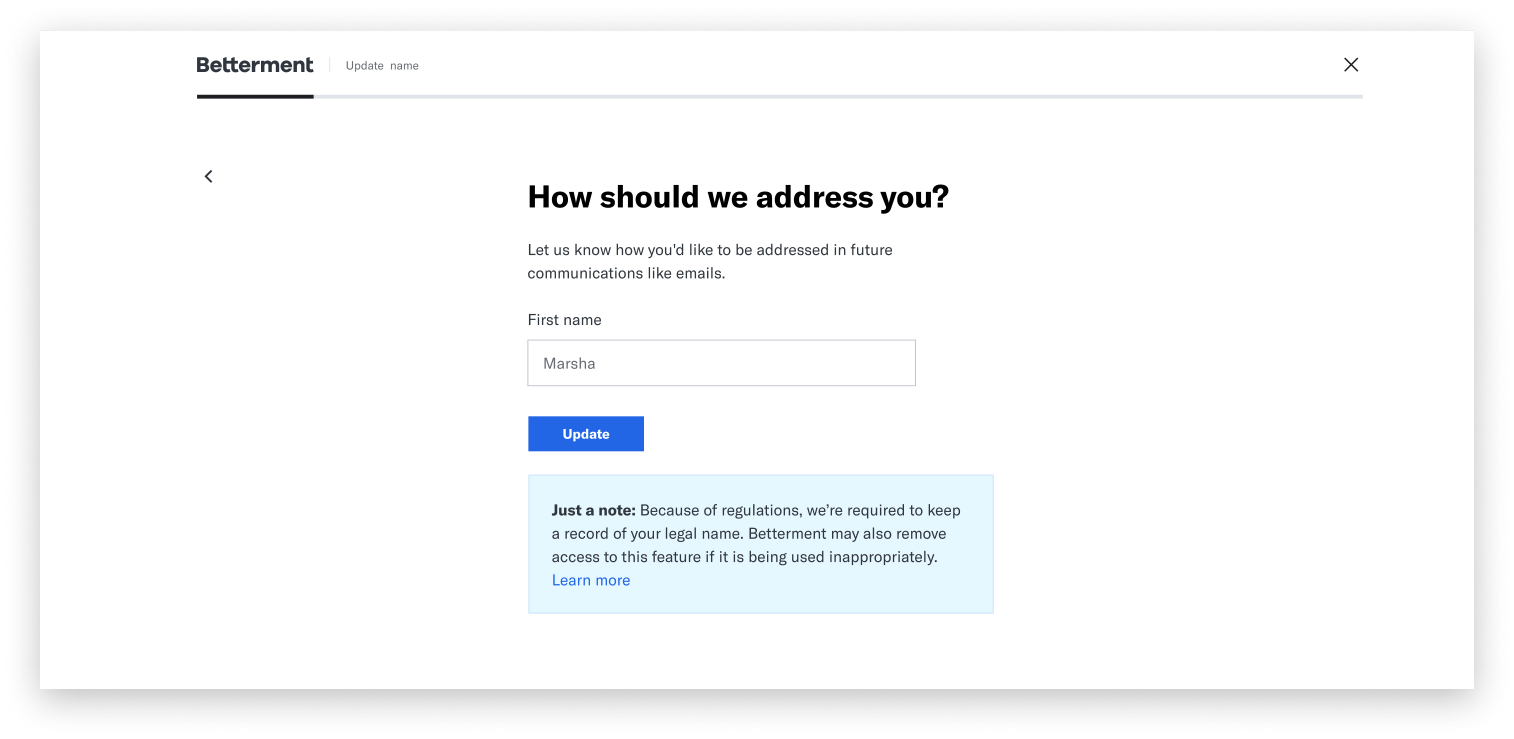
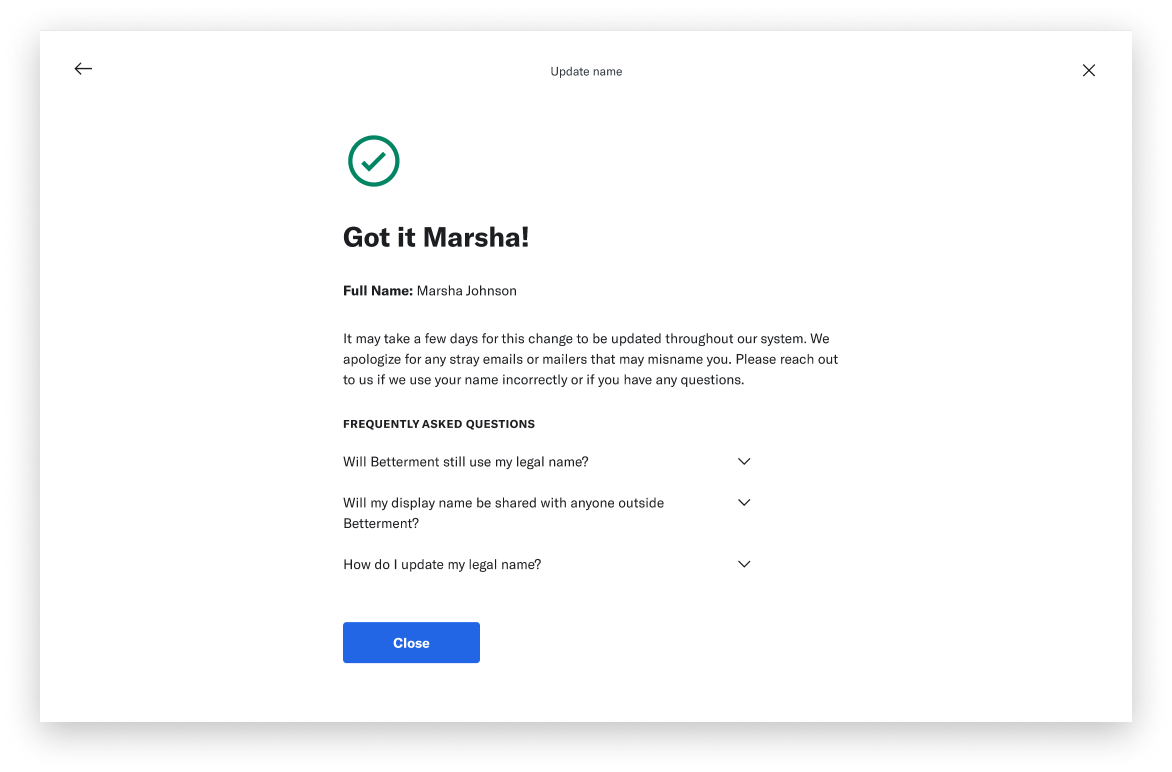
Instead of normalizing a person’s name as their legal name, we decided to prioritize preferred name as just simply their name. We chose a tone in our copy that was conversational, human, but still maintained the maintained the respect and authority a finance app needs.
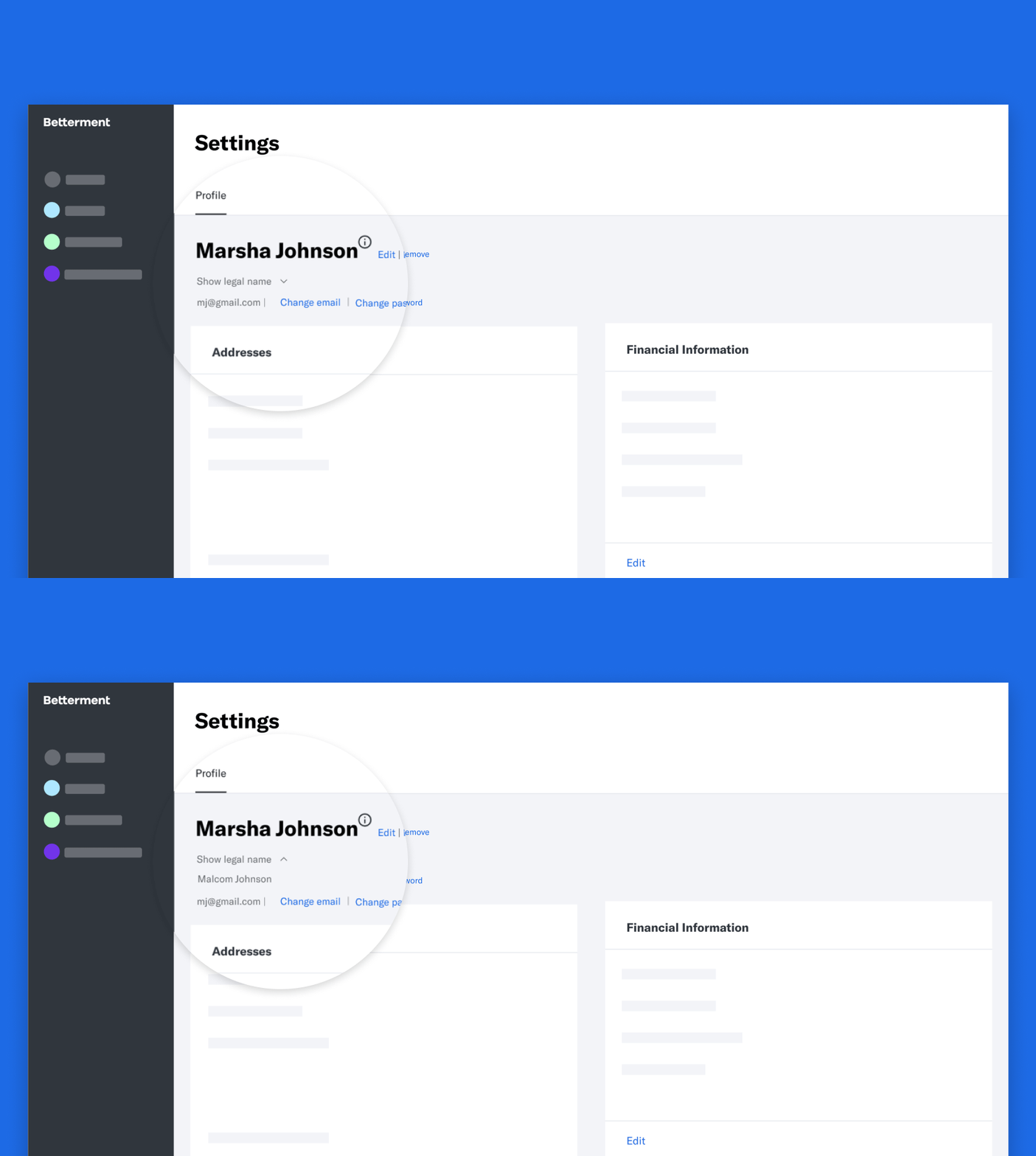
In this release, the last problem to solve was deciding how to display the legal name. We prioritized our trans or non-binary customers by choosing a user interface that allowed them to choose whether or not to view their legal name. A toggle was an obvious choice to give the customer control.
Learnings
This project is a quintessential example of what Project Inkblot calls ‘Targeted Universalism’. Jess wrote a great blog post expanding on this, but essentially it is the idea that if you design your solution around your most adversely impacted persona, all of your users will reap the benefits. Think #blacklivesmatter. The sentiment behind this is also foundational in Microsoft’s Inclusive Design fundamentals.
“Solve for one, extend to many. ”
By prioritizing our trans and non-binary customers over our legal team's concerns and potential confusion from cisgendered customers, we applied this principle in our copy, product development, and interface choices. Both internally and externally, we were pleasantly surprised by the enthusiastic response from all our customers.
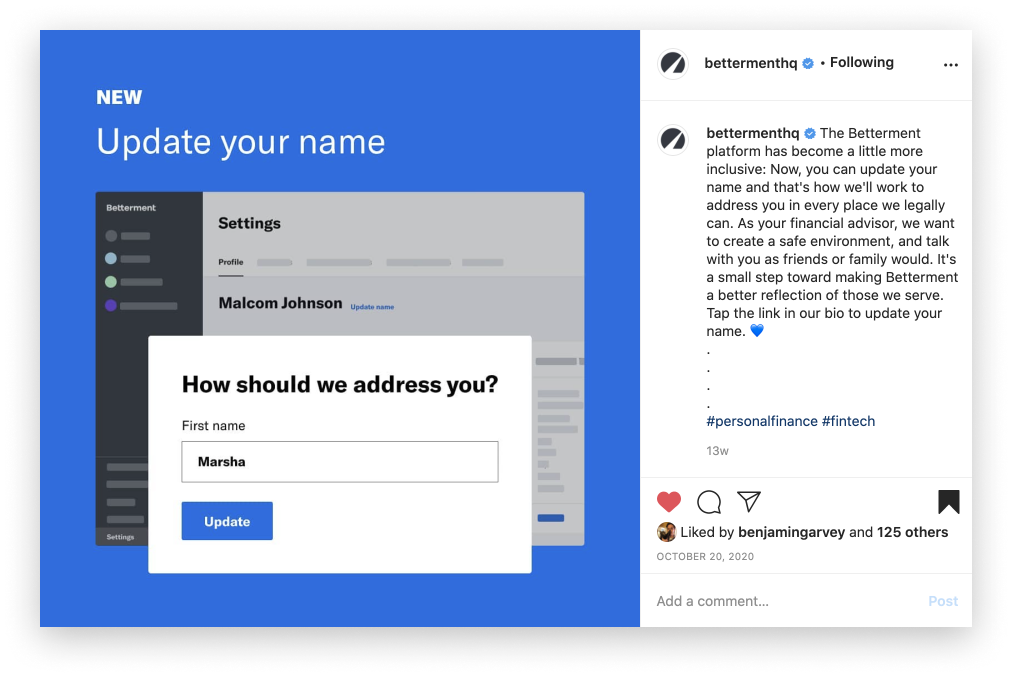
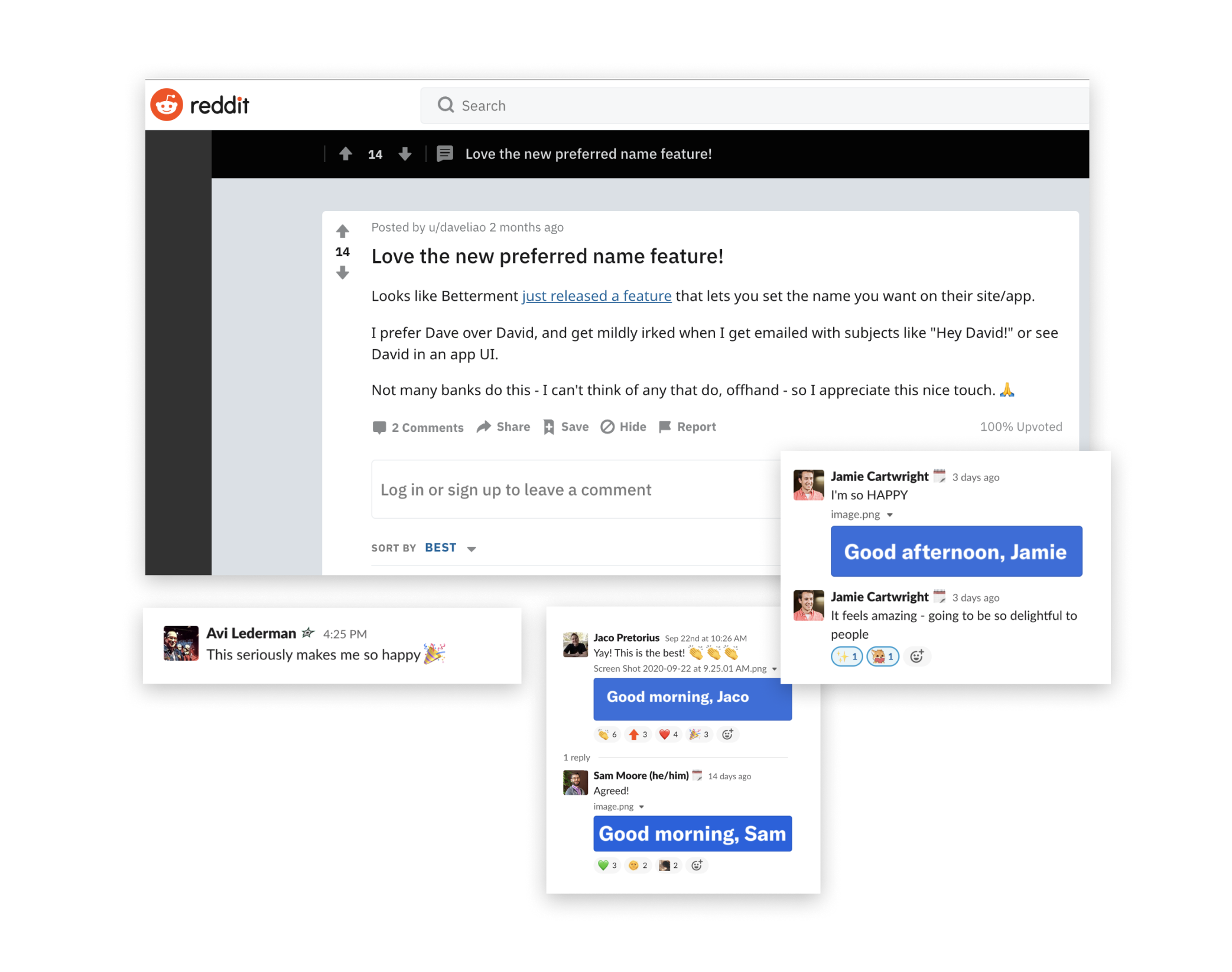
The success of the project propelled the addition of ‘preferred’ name into our signup flow, making Betterment’s product a little more inclusive.
“By using design to make our customers feel seen, we create deep emotional engagement. When people feel a sense of belonging, they’ll give you repeat business and they’ll tell others.
”